清康熙时期的祭蓝地粉彩福寿纹碗,康熙祭蓝釉(霁蓝)釉色深沉均
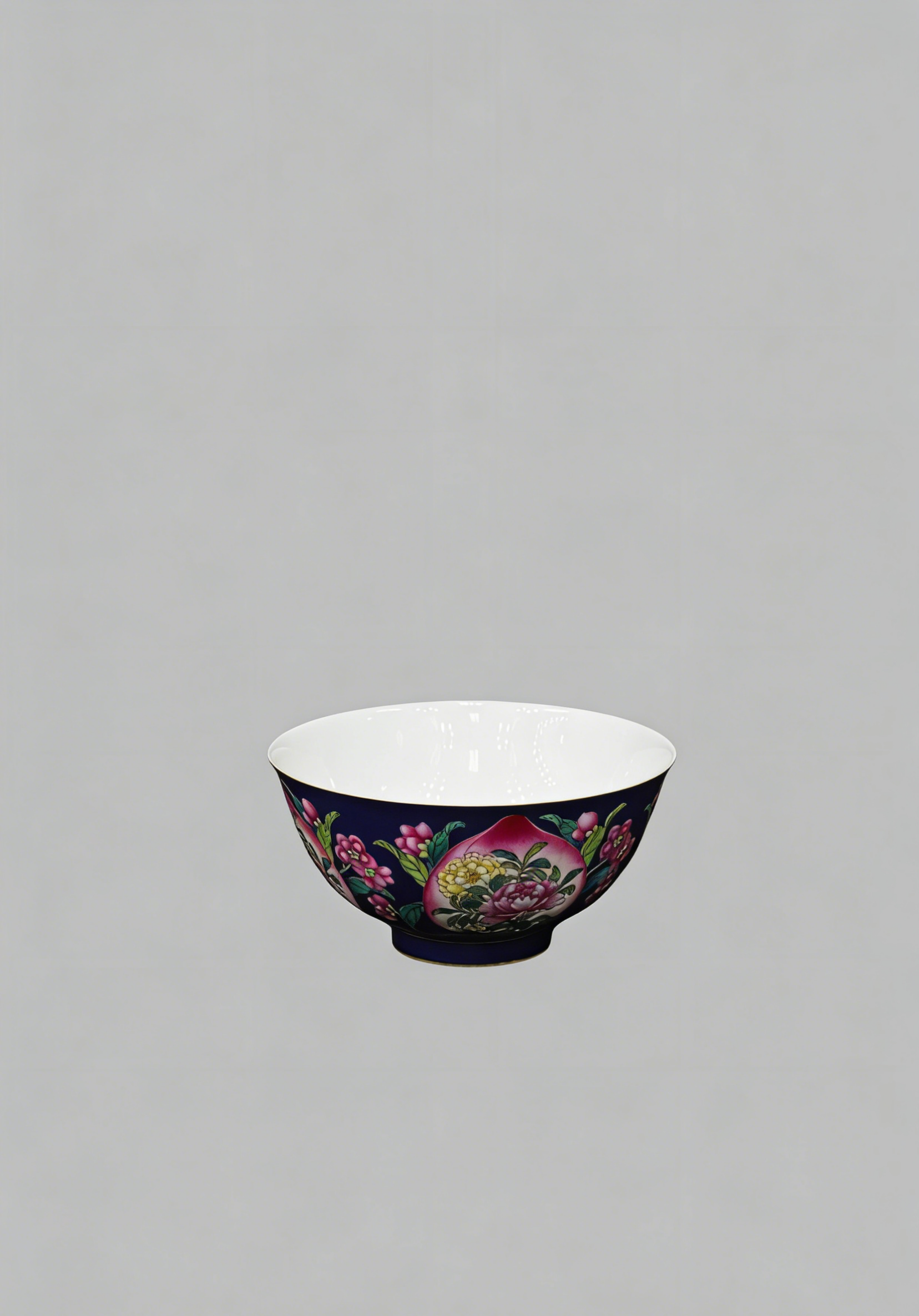
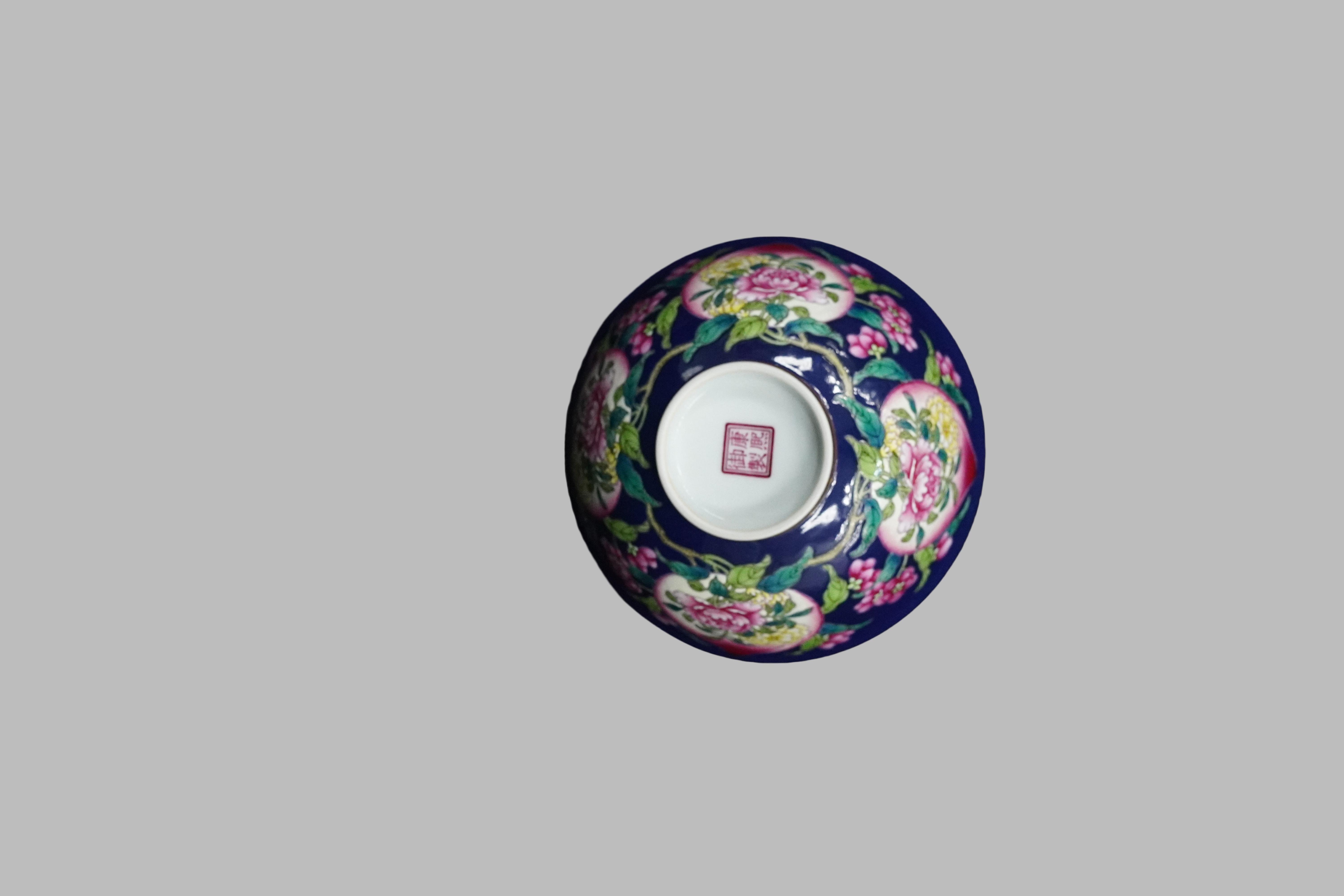
匀,被称为“宝石蓝”,是清代早期官窑的标志性釉色之一。康熙祭蓝地五彩碗的纹饰仍以“福寿纹”(寿桃、牡丹、花卉)为主,寓意“福寿双全、富贵吉祥”,但纹饰风格更“古拙刚劲”。祭蓝釉与粉彩的工艺结合,体现了清代中期“色彩对比、工艺复合”的审美追求,蓝地的沉稳与粉彩的艳丽形成强烈视觉冲击,是清代彩瓷艺术的代表之一。
The sacrificial blue glaze (ji blue glaze) of the Kangxi period is deep and uniform in color, known as "gem blue," and is one of the iconic glazes of official kilns in the early Qing Dynasty. The decorative patterns of Kangxi's five-color bowls on a sacrificial blue ground are still dominated by "blessings of longevity and prosperity patterns" (peaches of immortality, peonies, flowers), implying "double blessings of longevity and prosperity, wealth and auspiciousness," but the decorative style is more "primitive simplicity and vigor."
The combination of sacrificial blue glaze and powdered color craftsmanship reflects the aesthetic pursuit of "color contrast and composite craftsmanship" in the mid-Qing Dynasty. The calmness of the blue ground and the richness of the powdered colors form a strong visual impact, making it one of the representatives of Qing Dynasty colored porcelain art.
寿桃:碗中硕大的桃纹是“长寿”的象征,搭配枝叶,寓意“寿比南山”
牡丹:红色牡丹代表“富贵”,是清代瓷器常见的吉祥纹饰。
石榴(或花卉):辅助的花卉/果实(如碗侧的粉色花果)寓意“多子多福”
Peach of immortality: the large peach pattern in the bowl symbolizes "longevity," and when paired with branches and leaves, it implies "may one's life be as long as Nanshan Mountain" (a traditional Chinese blessing for enduring longevity).
Peony: red peonies symbolize "prosperity and nobility" and are a common auspicious pattern on Qing Dynasty porcelain.
Pomegranate (or other flowers): supplementary flowers / fruits (such as the pink flowers and fruits on the bowl's side) imply "blessings of multiple children and prosperity."