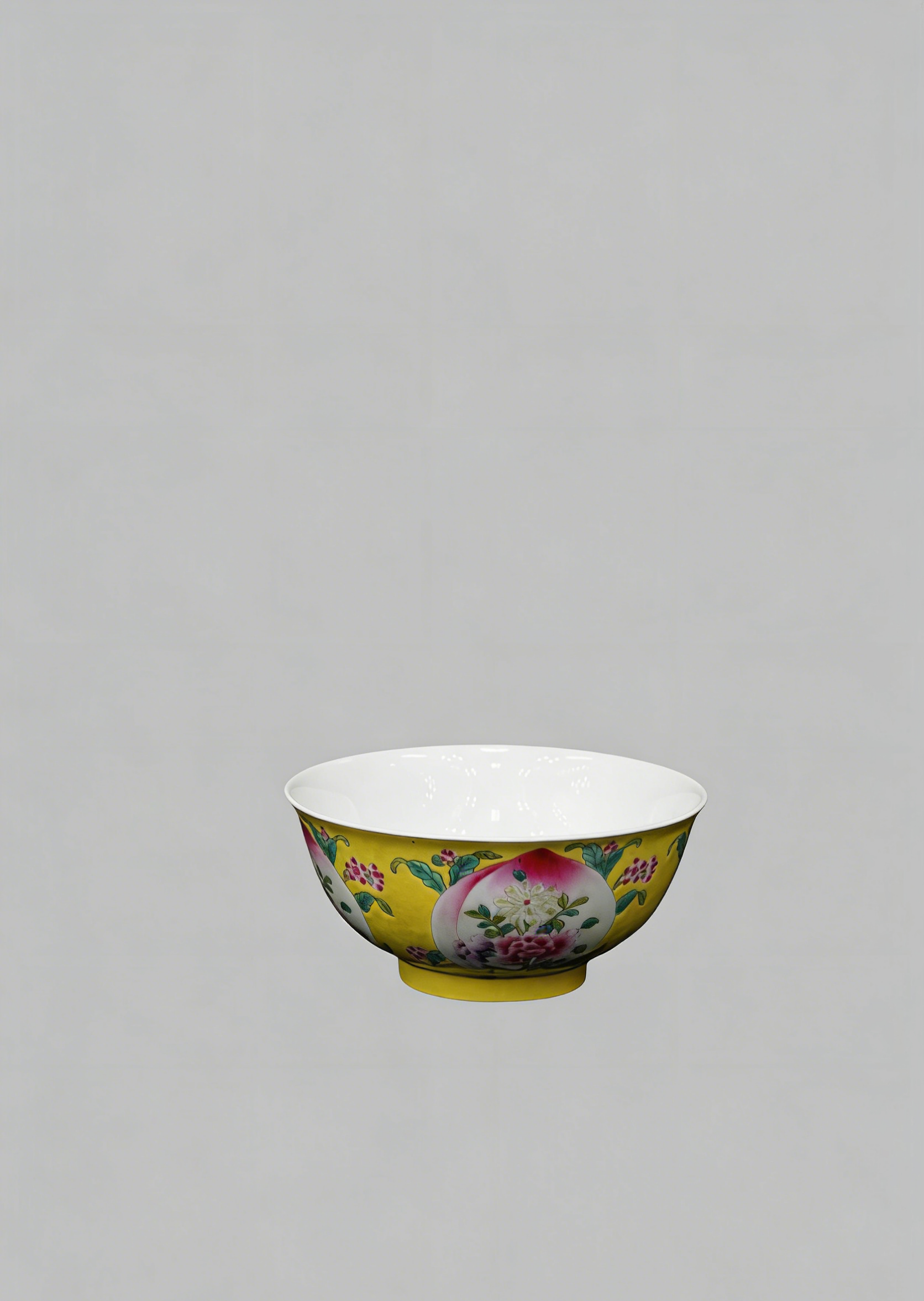
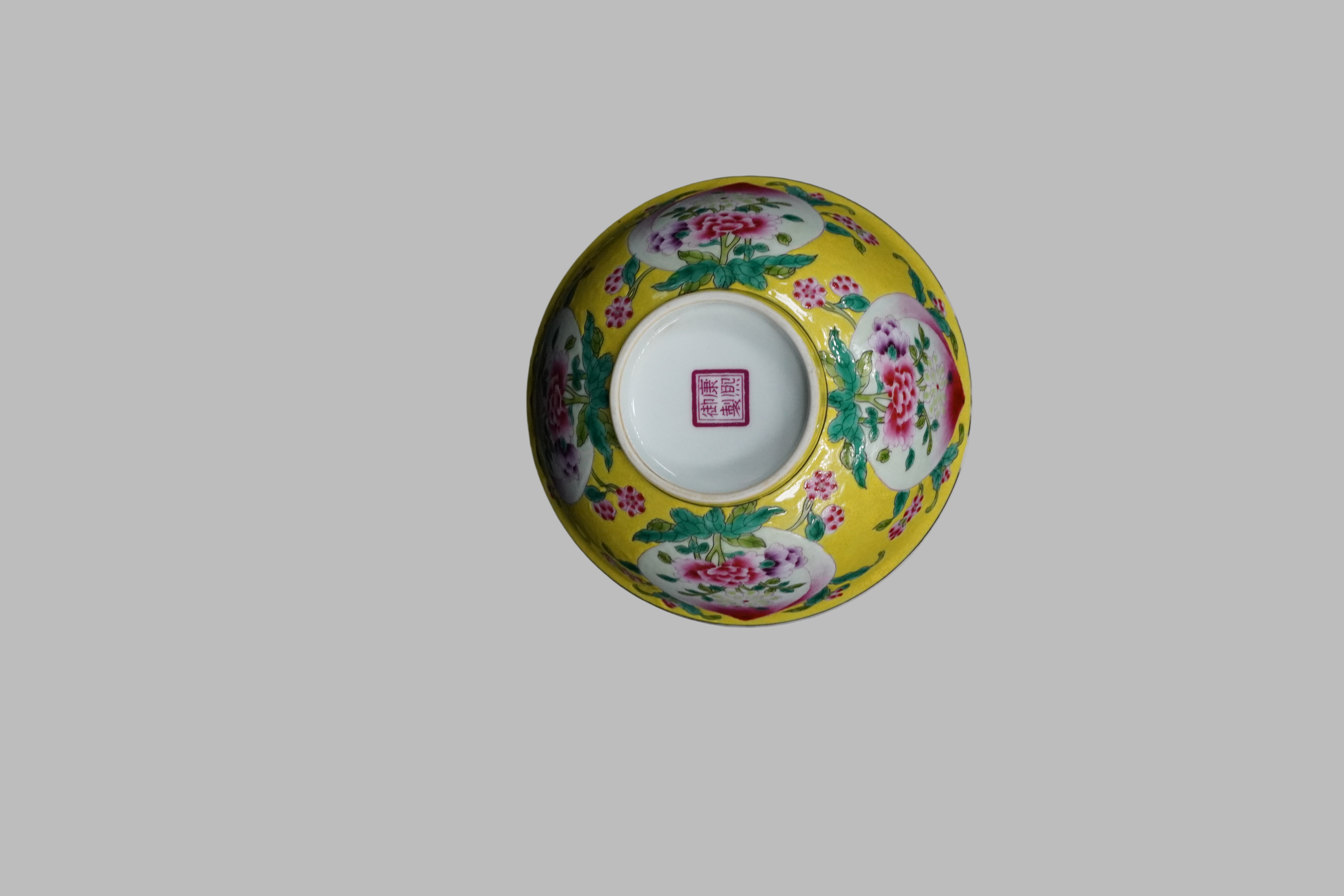
清康熙黄地釉寿桃碗,黄地粉彩是宫廷御用瓷的代表工艺之一,黄釉("帝王黄”)仅皇室可使用,工艺精细(轧道+开光+粉彩渲染),是清代彩瓷的巅峰品类;先以高温烧成均匀莹润的“柠檬黄/鸡油黄”釉(釉色如帝王服饰的明黄),是清代宫廷瓷器的标志性釉色;在黄釉地上用“轧道”(细如毫芒的卷草纹)做底,再“开光”(留白区域)绘制粉彩纹饰,经低温二次焙烧,色彩鲜艳且层次丰富。
Yellow-ground powdered color porcelain is one of the representative crafts of imperial court porcelain. Yellow glaze ("imperial yellow") was exclusively used by the imperial family, featuring exquisite craftsmanship (trailed carving + panel design + powdered color rendering) and ranking as the pinnacle category of Qing Dynasty colored porcelain.
Firstly, a uniform, glossy "lemon yellow / chicken fat yellow" glaze was fired at high temperature (its color resembling the bright yellow of imperial robes), which became an iconic glaze color of Qing court porcelain.
On the yellow glaze ground, "trailed carving" (fine scroll patterns as thin as hair) was applied as the base, followed by "panel design" (reserved white areas) painted with powdered color patterns, and then fired a second time at low temperature, resulting in vivid colors with rich layering.
寿桃:硕大的桃纹是"长寿”的核心象征,搭配花卉(如牡丹),寓意“寿比南山、富贵双全”。
花卉/枝叶:辅助的粉色小花、翠绿枝叶,代表"生机盎然、吉祥美满”
辅助纹饰:黄釉地上的轧道卷草纹:寓意“连绵不断、福寿永恒”。
Peach of immortality: the large peach pattern is the core symbol of "longevity." Paired with flowers (such as peonies), it implies "may one's life be as long as Nanshan Mountain and enjoy double blessings of prosperity and nobility."
Flowers / branches and leaves: the supplementary pink small flowers and emerald green branches and leaves represent "vitality and auspicious perfection."
Supplementary patterns: the trailed carving scroll patterns on the yellow glaze ground imply "endlessness and eternal blessings of longevity and prosperity."